
Seller Declarations and Brokerage Contracts in Québec: Preparing a Property Listing
Preparing to list a property involves more than discussing its price, presentation, and marketing strategy.
Before or during the listing process, a broker may need to review information about the property's ownership, cadastral identification, municipal assessment, registered rights, and history. Some information comes directly from the seller, while other details may be found in public registers and supporting documents.
In Québec, the Brokerage Contract – Sale and the Declarations by the Seller of the Immovable serve distinct but closely related roles in this process.
Understanding those roles, and having relevant property information organized, can help brokers approach seller meetings and property-file preparation with greater clarity.
This guide explains how the forms differ, what property information may be useful before a listing, and how a structured approach can support the preparation of a property dossier.
By le topo · Updated
In short
- The Brokerage Contract – Sale establishes the relationship between the seller and their real estate broker, under the applicable contractual framework.
- The Declarations by the Seller gather information about the property's condition, history, and facts known to the seller.
- Preparation starts with information. Ownership, cadastral, municipal, and historical records may provide useful context before a new listing.
- Different sources complement one another. Seller-provided information and official records serve distinct purposes and may raise questions worth clarifying.
- A more organized starting point. le topo helps bring available property information and source documents together, supporting a more structured approach to listing preparation.
Brokerage Contract – Sale vs. Declarations by the Seller: what's the difference?
Brokerage Contract – Sale
The Brokerage Contract – Sale establishes the contractual relationship between a seller and the real estate broker they engage to sell their property. It sets out the terms and conditions of that relationship, including the object and term of the contract, the price and terms of sale, the broker's remuneration, and the obligations of each party.
For a chiefly residential immovable with fewer than five dwellings, the OACIQ's seller's guide lists exclusive and non-exclusive versions of the contract, with separate forms for divided and undivided co-ownership and for a mobile home on leased land. Which form applies depends on the property and the transaction.
Declarations by the Seller of the Immovable
The Declarations by the Seller of the Immovable (DS) form concerns the property itself. The seller provides information about its condition, history, and relevant known circumstances, together with the supporting documents in their possession. Depending on the applicable form, it addresses topics such as:
- work and renovations carried out;
- water infiltration and known damage;
- certain property characteristics, such as the roof, plumbing, and heating;
- servitudes and other relevant rights or restrictions;
- historical circumstances and supporting documents.
The seller answers to the best of their knowledge: according to the OACIQ, the form does not require them to declare something they do not know.
The OACIQ states that the DS form is mandatory for the sale, by a natural person, of a chiefly residential immovable with fewer than five dwellings, including undivided co-ownership; divided co-ownership has its own form (DSD). Where it applies, it is a mandatory annex to the brokerage contract, completed with the seller and signed at the same time as the contract.
How the brokerage contract and the seller's declarations differ
| The mandateBrokerage Contract – Sale | The propertyDeclarations by the Seller | |
|---|---|---|
| Main purpose | Establishes the brokerage relationship | Documents the seller's information about the property |
| Focus | The terms of the brokerage mandate | The property's condition, characteristics, and history |
| Main subject | The seller and the broker | The immovable |
| Relationship between forms | The contract governing the mandate | A mandatory annex to the contract, where applicable |
Before the seller meeting: understanding the property you're preparing to represent
A seller knows their property through personal experience. Public registers and official documents provide another perspective: how the property is identified, what rights have been published, and what certain administrative records indicate.
These two perspectives can complement one another.
Before a seller meeting, having access to relevant property information can help the broker become familiar with the documented characteristics of the immovable and identify subjects that may deserve discussion.
For example, a property's cadastral designation, municipal assessment, and published ownership information may provide useful context that is not immediately apparent from the listing details alone.
The OACIQ itself describes starting with the information needed for the DS form as a good idea when taking up a brokerage contract, since the seller's declarations may affect the broker's view of the property's market value or the planned marketing strategy.
Preparing the property file before a listing
Illustrative framework
- 1. Become familiar with the propertyReview available identification, municipal, and published property information.
- 2. Identify topics for discussionNotice information gaps, relevant historical details, or subjects requiring clarification.
- 3. Organize the supporting materialKeep available sources and documents together for future consultation.
Seller meeting
The value of preparation is not having every answer in advance. It's arriving with a clearer understanding of the information already available and the questions that may remain.
What property information may be useful when preparing a listing?
Several kinds of public and documentary information can help a broker become familiar with a property. Our guide to the 12 OACIQ verification areas covers them in depth; here, the focus is on why each can matter when preparing a listing.
Ownership and published rights
The Québec Land Register contains published deeds and rights, such as transfers of ownership, hypothecs, and certain servitudes. It is useful for understanding the property's published ownership history and certain registered rights before meeting the seller.
Cadastre and lot identification
The Québec cadastre shows how a lot is identified and represented. It is useful for confirming the cadastral designation associated with the property, which other official records refer to.
Municipal assessment and taxes
The property assessment roll (in French) provides administrative and financial information, such as the assessed value and certain characteristics used for assessment purposes. Municipal and school tax bills add to this picture. The assessed value is not the same as market value.
Servitudes and restrictions
Servitudes and certain restrictions may appear in deeds published in the Land Register or be reported in the certificate of location. Knowing about them early can indicate rights or constraints worth discussing, and documents the seller may be able to provide.
Zoning and environmental information
Municipal by-laws and government maps provide geographic and regulatory context, such as zoning, the flood zone map, or the register of contaminated land (in French). Our guide to flood zones in Québec explains how to read flood mapping.
Certificate of location
The certificate of location (in French) contains a land surveyor's professional findings on the property's situation in relation to its titles, boundaries, and certain applicable rules. The OACIQ's seller's guide lists it among the documents the seller provides to the broker. Our guide to inspections, certificates of location, and broker checks explains what it covers.
What a property's history can add to the conversation
A property's current description tells only part of its story.
Earlier listing descriptions, previous seller declarations when accessible, and documents relating to past work may provide additional context about how the property has changed over time.
For example, an older document may refer to renovations, additions, or a particular feature that is described differently in more recent material.
Fictional illustration
How an earlier record adds context
Earlier listing description2014
Bright two-storey home with a fully finished basement, including a family room and a second bathroom.
Current informationToday
The latest available documents describe one bathroom and do not mention work in the basement.
Topic for clarification
The basement work described in 2014: what was done, when, and which documents may still be available.
These differences do not automatically indicate a problem. They may, however, provide useful context for understanding the property's documented history and identifying subjects that deserve clarification.
Historical records are valuable not because they provide every answer, but because they can add context to the information available today.
When different sources tell different parts of the story
Property records are created for different purposes and may reflect different points in time.
A municipal assessment roll, a seller's declaration, a previous listing sheet, and a certificate of location do not necessarily describe the property in the same way.
Differences may reflect updates, historical circumstances, source-specific definitions, or information that requires further clarification. In the fictional example above, the basement described in 2014 may since have been altered, may have been described differently for marketing purposes, or may simply have been left out of later documents.
Seeing those records together can make the differences easier to notice and understand in context.
The broker remains responsible for determining what the information means for the particular file and whether additional steps are appropriate.
Building an organized property file from the first meeting
Information gathered before or during the preparation of a listing can remain relevant throughout the brokerage process.
Property identification, published rights, municipal information, historical documents, and supporting records may be consulted at different moments. The OACIQ's seller's guide, for example, lists documents the seller provides at the signing of the brokerage contract or as soon as possible afterwards, such as the certificate of location, the deed of sale, invoices for work carried out, and municipal and school tax bills.
Keeping those materials organized makes it easier to revisit the information, trace its source, and understand which documents are available.
A structured property file also helps distinguish the information already gathered from questions or documentation that may still require attention.
Good organization is not simply about storing documents. It's about making property information easier to find, review, and use when it becomes relevant.
How le topo gives you a better starting point for your next listing
Preparing a new listing often starts with getting to know the property.
That can mean consulting the Québec Land Register, cadastral information, municipal records, environmental data, and other available documents, often through separate sources.
le topo brings information from its covered sources together, starting from a single property address. The platform presents available findings in a structured dashboard, with supporting documents and a professional property report. It also shows which information was unavailable and which points may call for follow-up.
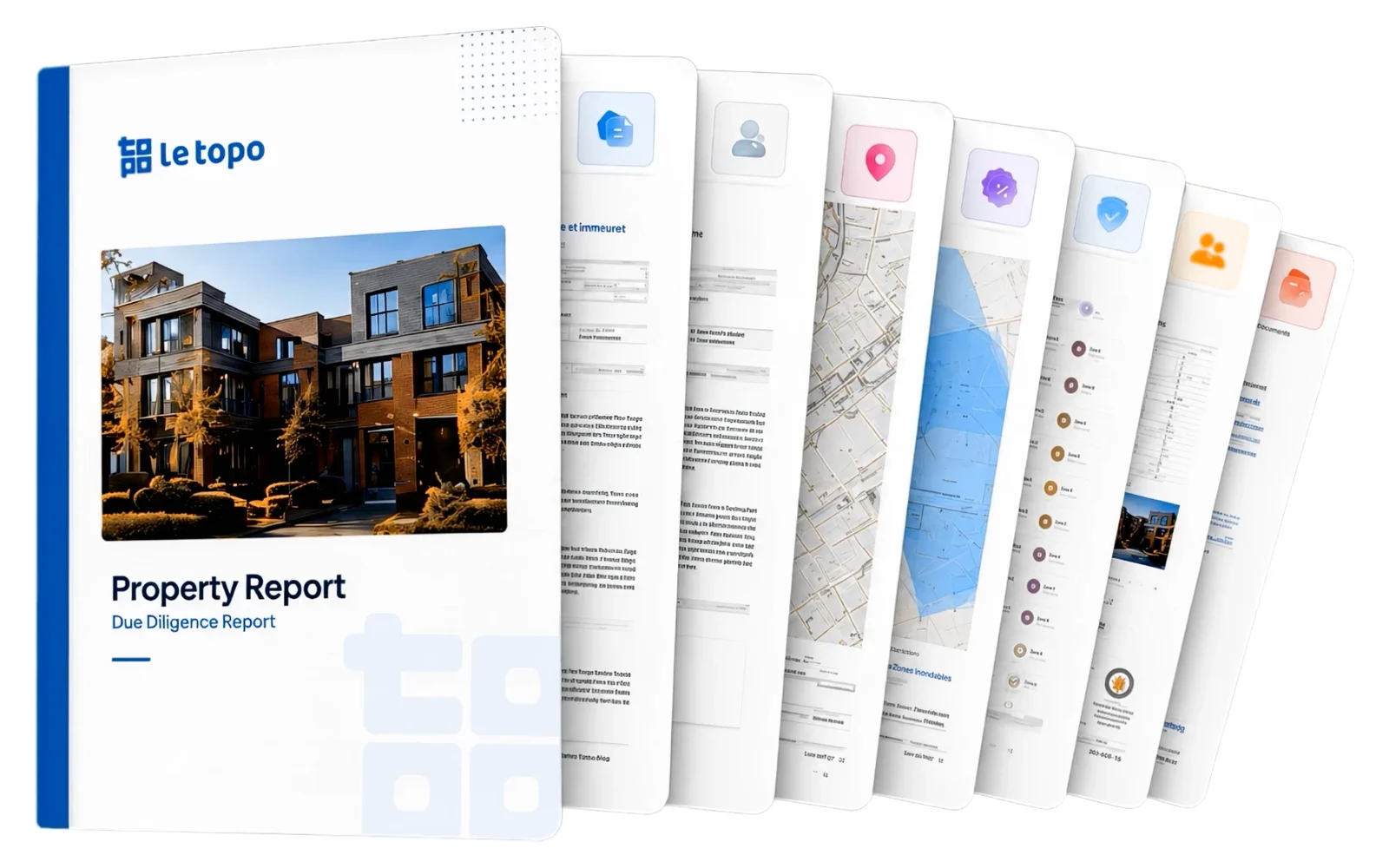
For a listing broker, this provides a practical way to become familiar with the property's documented background before a seller meeting or as the property file takes shape. The report and source documents then stay together with the file, ready to be added to your document management system.
Instead of beginning with a collection of disconnected searches, the broker can start with an organized overview of the available information and focus their attention on the details that matter for the specific property. le topo currently covers single-family homes and residential plexes of 2 to 5 units across Québec.
Your knowledge of the client and your professional expertise remain central. le topo helps you arrive with the property information better organized. Professional interpretation and any required follow-up remain with the broker and the relevant specialists.
Frequently asked questions
What is the Declarations by the Seller of the Immovable form used for in Québec?
The Declarations by the Seller (DS) form documents the seller's information about a property's condition, characteristics, and history, to the best of their knowledge. Where it applies, it is a mandatory annex to the Brokerage Contract – Sale, completed with the seller and signed at the same time as the contract.
What's the difference between a brokerage contract and the seller's declarations?
The Brokerage Contract – Sale establishes the relationship between the seller and their broker and sets out its terms. The Declarations by the Seller concern the property itself: its condition, history, and facts known to the seller.
Can property research help a broker prepare for a seller meeting?
Yes. Available public records and supporting documents can provide useful context about a property's identification, published rights, municipal information, and history. Reviewing organized information before a meeting can help a broker become familiar with the property's documented background and identify subjects that may deserve discussion.
Where can I find official information about a property in Québec?
Main sources include the Québec Land Register, the Québec cadastre, the municipal assessment roll, and government maps such as the flood zone map. The information available and the conditions of access vary from one source to another.
Why is a certificate of location relevant when preparing a listing?
A certificate of location contains a land surveyor's findings on the property's situation, which may include servitudes, encroachments, or certain restrictions. The OACIQ's seller's guide lists it among the documents a seller provides to their broker.
Can earlier seller declarations be found?
Earlier declarations may be accessible to authorized professionals through certain real estate listing systems, depending on whether the documents are available. They can add historical context, without necessarily reflecting the property's current condition.
How can le topo support listing preparation?
le topo brings available property information from covered sources into a structured dashboard and professional report. This helps Québec listing brokers review the property's documented characteristics and organize supporting information before or during the preparation of a listing.
Can an automated property report replace a broker's verifications?
No. A report can make information easier to gather and review, but the broker's verifications, professional judgment, and obligations remain their own, along with the involvement of experts when needed.
Sources
- OACIQ – How to use the mandatory form Declarations by the seller of the immovable
- OACIQ – Context of use of the form (Brokerage Contract – Sale)
- OACIQ – Seller's guide: The Brokerage contract – Sale
- OACIQ – Seller's guide: The Declarations by the seller of the immovable
- OACIQ – Guideline: Verification, Information and Advice
- OACIQ – Guideline, section 6: Information about the property, main verifications and adverse factors
- OACIQ – Importance of an up-to-date certificate of location
- Government of Québec – Land Register
- Government of Québec – Québec cadastre
- Government of Québec – Property assessment (in French)
- Government of Québec – Certificate of location (in French)
- Ordre des arpenteurs-géomètres du Québec – Selling a property (in French)
- Government of Québec – Check whether a property is in a flood zone
- Ministère de l'Environnement – Register of contaminated land (in French)